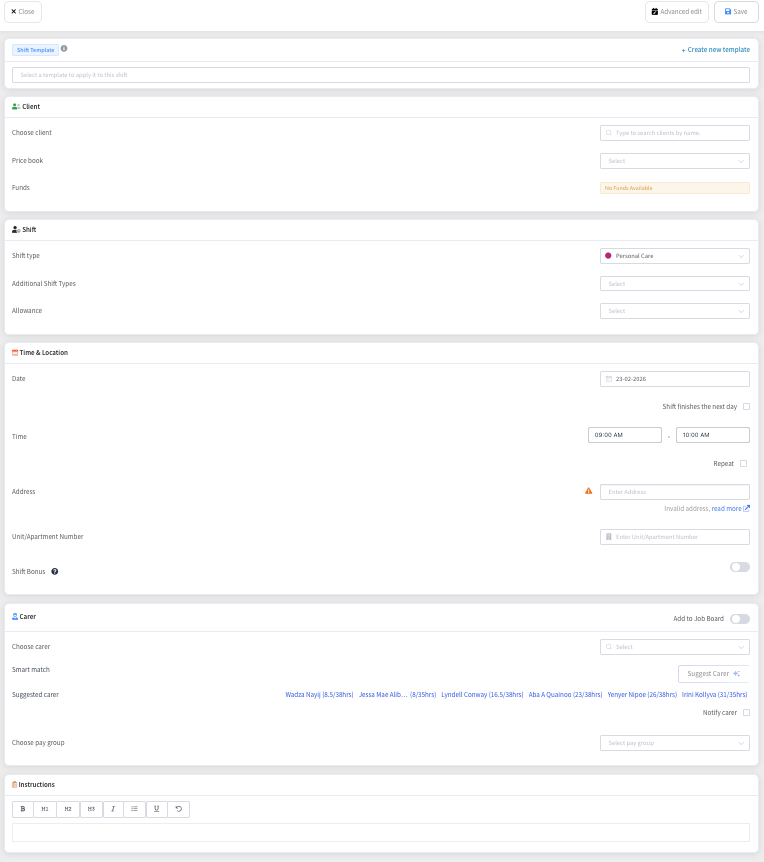
Shift building without spreadsheet drag
Plan, edit and rebalance work from a clearer scheduling surface built for real roster movement rather than static admin grids.
Vespect combines worker detail, shift setup, mobile signals and operational risk in one scheduling surface so coordinators can move faster without guessing.
Less juggling
Coverage decisions are easier because staff detail, shift detail and readiness signals sit closer together.
Fewer surprises
Conflicts and compliance issues appear while the roster is still editable instead of after the day has already shifted.
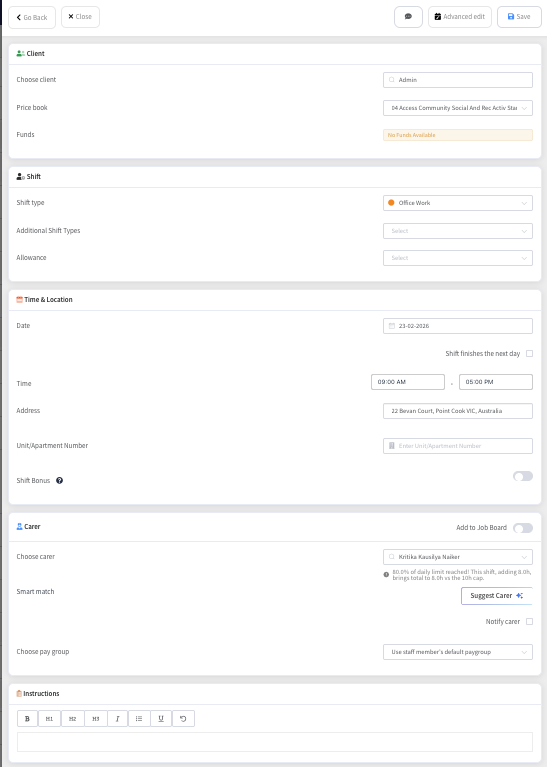
A roster is not just allocation. It is worker fit, participant continuity, readiness, travel, attendance and billing context moving through the same day of operations.
Plan, edit and rebalance work from a clearer scheduling surface built for real roster movement rather than static admin grids.
Recommendations account for worker fit, participant detail and operational readiness so the best option surfaces faster when plans change.
Worker availability and shift detail are closer to the planning decision, which cuts down on avoidable outreach and last-minute mismatch.
Spot document gaps, overlap issues and weak staffing choices before they become phone chains, service disruption or billing cleanup.
Use the workforce to help close gaps when coverage breaks, without losing control of the operational context around that shift.
What happens in the field loops back into timesheets, approvals and billing so the roster does not drift away from reality after assignment.
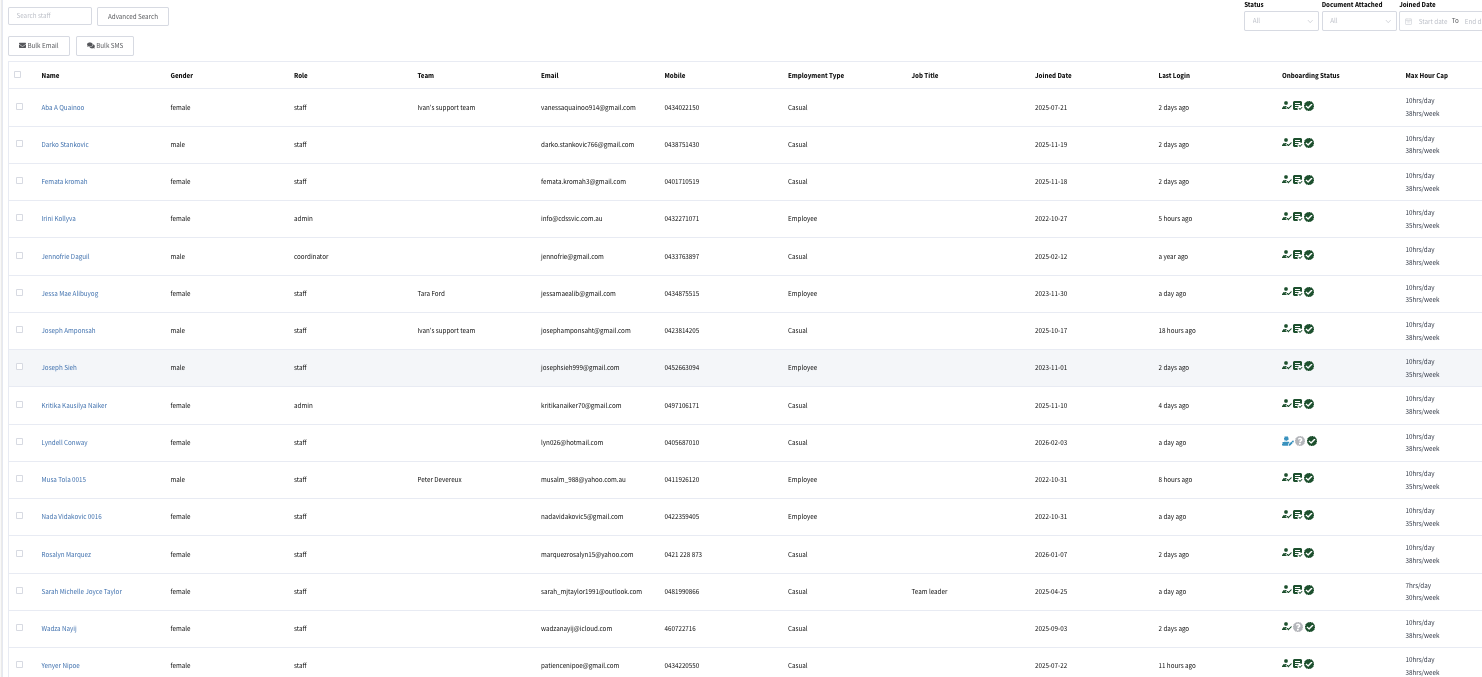
Bring worker list detail, joined status, onboarding markers and shift builder controls closer together so the schedule feels like an operating system, not a patchwork.
The goal is not to hide complexity. It is to make the system hold more of it for the coordinator so they are not manually carrying every decision.
70%
The day board becomes easier to adjust because staff, shift and readiness context are visible in one place.
3x
Job board support and smarter worker context help close gaps before they become service failures.
0
Overlap, readiness and mismatch issues are surfaced earlier instead of becoming expensive surprises later.
Bring shift setup, worker context and recovery flow into one system built for the real pace of care scheduling.